
Real-World AnalysisReal-World Stories
Explore insights, applications, and stories from the field using handheld XRF, LIBS, VisNIR, and portable benchtop analyzers across scrap recycling, mining, geochemistry, forensics, and more.
SciAps Instant Detection of Banned Fluorinated Ski Waxes with Handheld LIBS
Eight cross-country ski sections were evaluated in a blind study to determine if fluorine could be correctly identified.
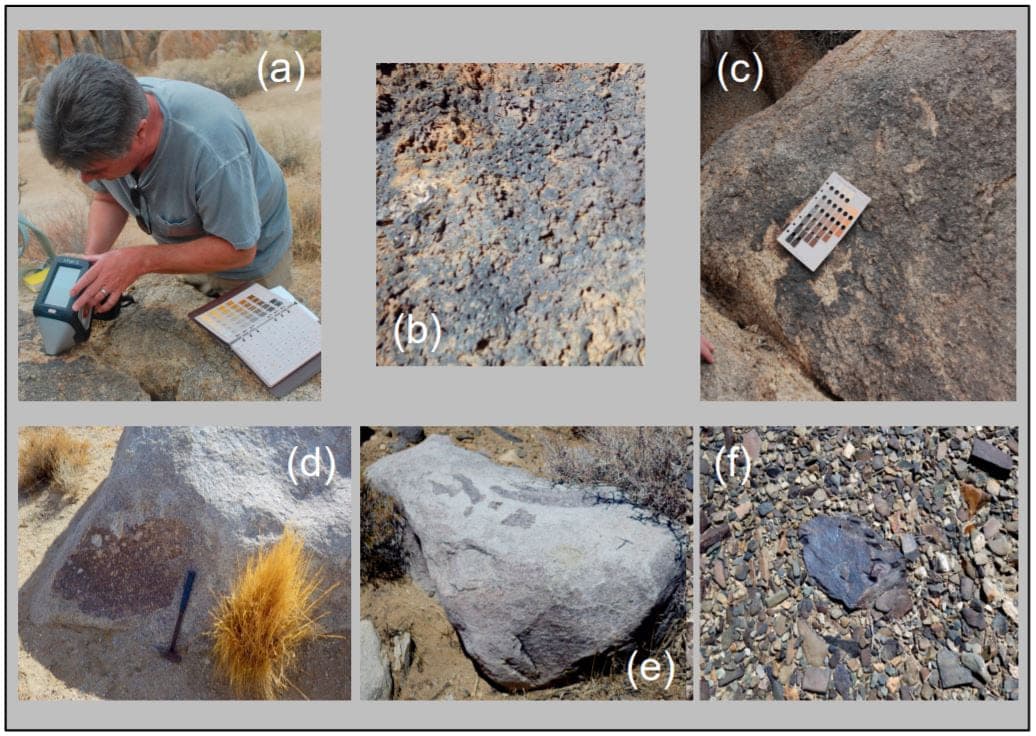
In-field analysis of rock varnish with SciAps LIBS
This study investigated the chemical composition of rock varnish using SciAps Z-300 handheld LIBS to determine LIBS utility for three applications: elemental detection and identification, micro-chemical mapping, and subsurface compositional profiling. In situ LIBS analysis of rock varnish and visually similar coatings on granite outcrops and boulders across the Mojave Desert climatic region recognized the most abundant elements in rock varnish—Mn, Fe, Si, Al, Na, K, Mg, Ca and Ba, along with the primary spectral lines for H, Li, Ti, V, Sr and Rb.
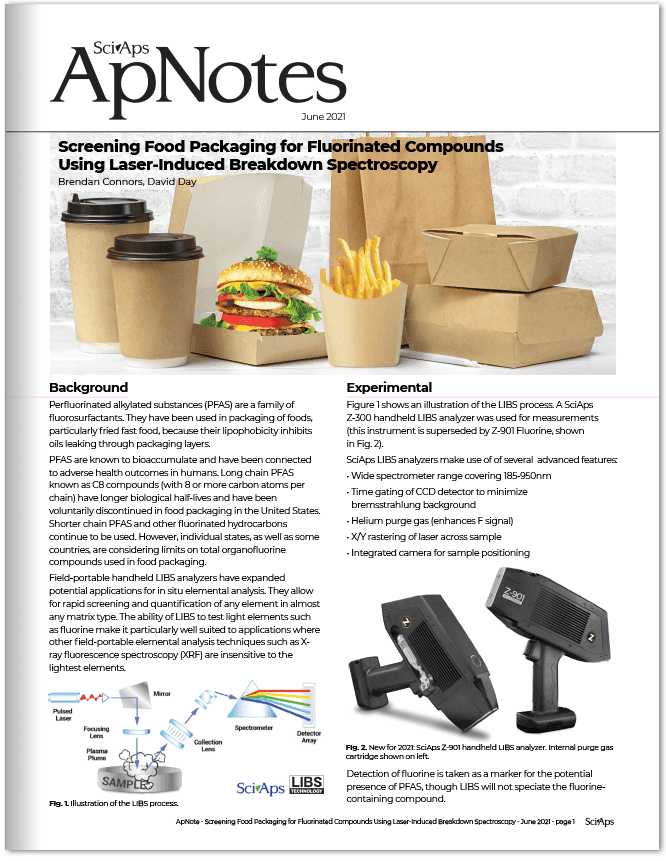
SciAps LIBS test method for fluorine in food packaging
Brendan Connors, SciAps senior scientist, has used the handheld LIBS to analyze the presence of fluorine as a marker for the potential presence of PFAS in popular food packaging, including burgers, chips and popcorn.
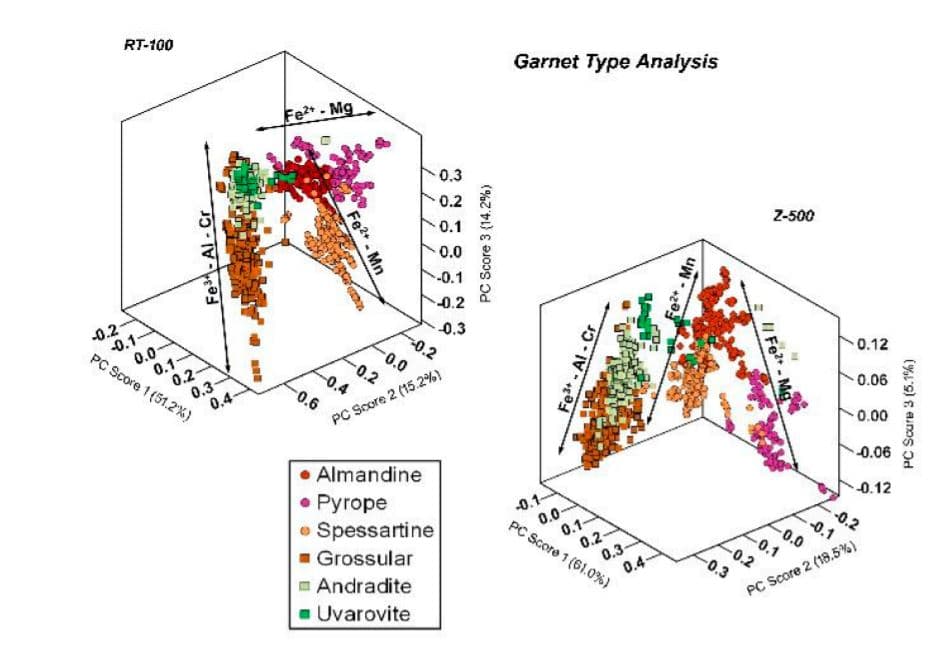
Analysis of garnet by LIBS — two practical applications
This study evaluated two practical applications of handheld LIBS using SciAps Z-300—validation of labels assigned to garnets in museum collections, and discrimination of LCT (lithium-cesium-tantalum) and NYF (niobium, yttrium and fluorine) pegmatites based on garnet geochemical fingerprinting—both of which could be implemented on site in a museum or field setting with a handheld LIBS analyzer.
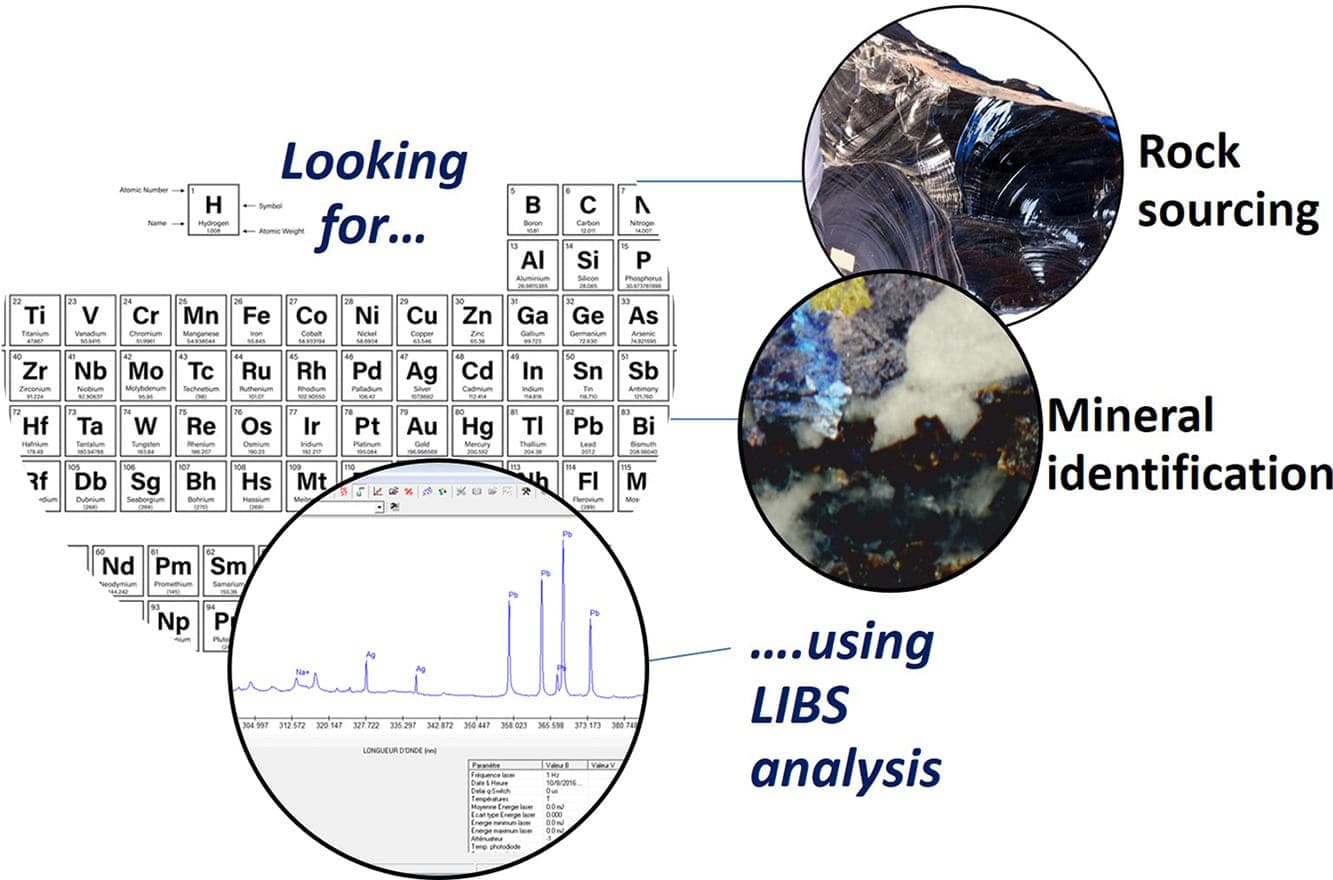
Advances in LIBS analysis for geology: A critical review
LIBS gives access to the most relevant elements; discrimination and sourcing of rocks or gems can be easily obtained; light elements are well detected at low level, and quantified in rocks; elemental LIBS mapping for strategic elements is of first interest.
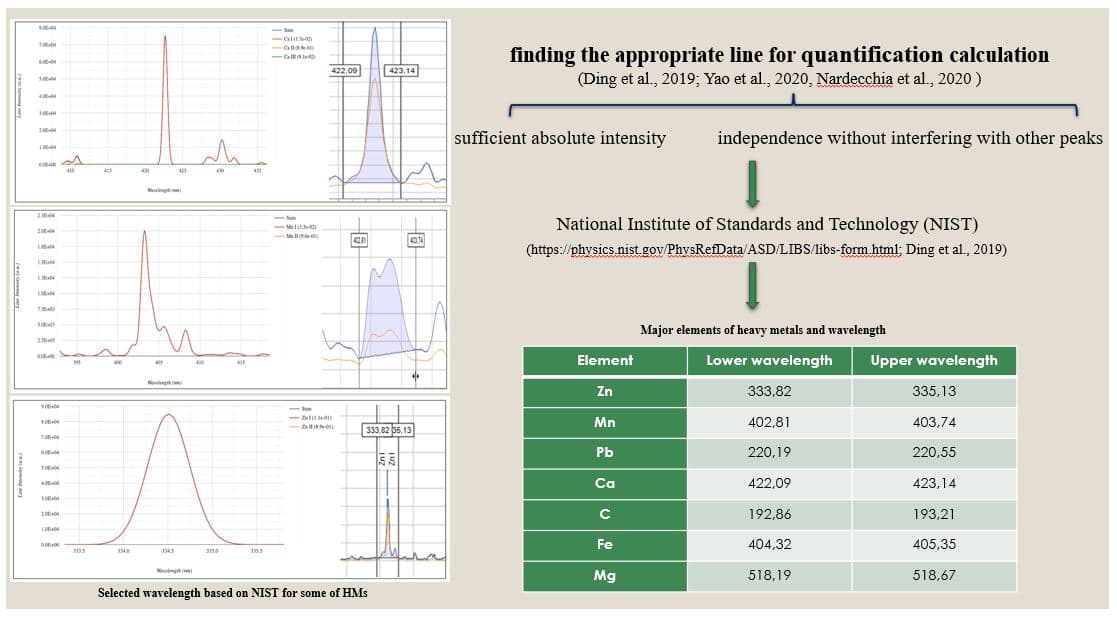
Investigation of handheld LIBS in terms of heavy metal detection in contaminated soil
SciAps LIBS was used to perform heavy metals analysis in contaminated soil. Handheld LIBS simplifies the necessary qualitative and quantitative analysis and is faster than other conventional techniques.
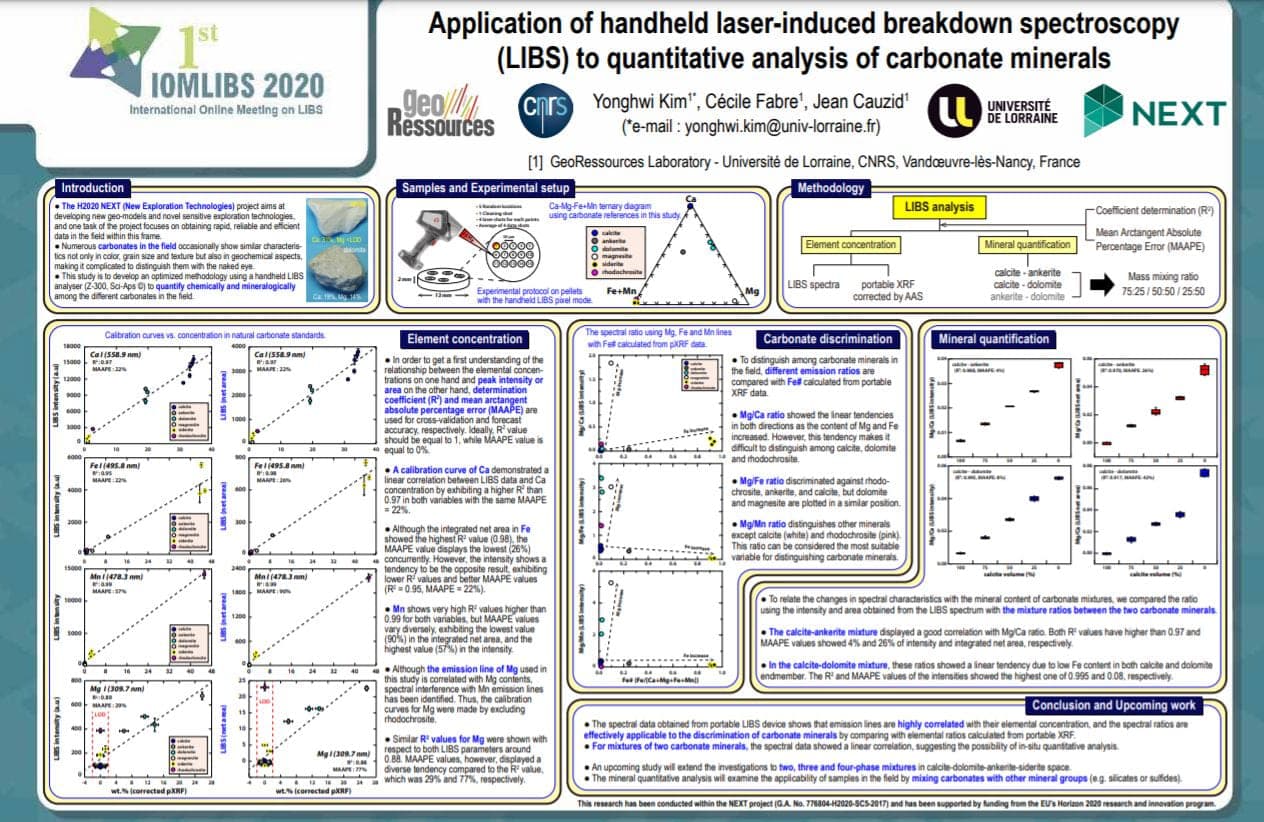
Application of Handheld LIBS to Quantitative Analysis of Carbonate Minerals
Handheld LIBS is effectively applicable for in-field determination of carbonates and quantifying carbonate mixtures. The study achieved accurate results with limited sample pre-treatment and faster analyses than other conventional techniques.
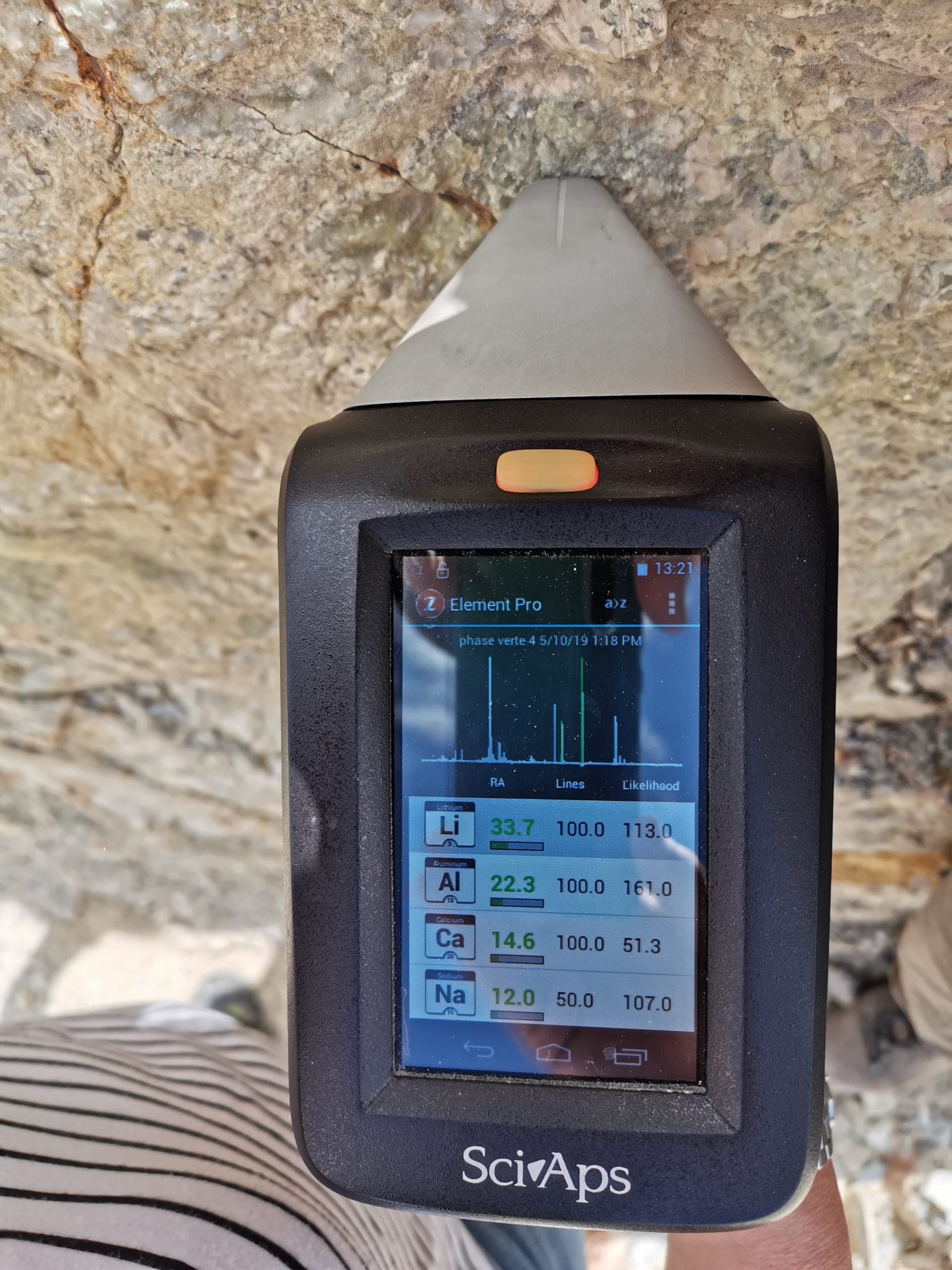
Analyses of Li-Rich Minerals Using Handheld LIBS
Researchers used SciAps Z-300 LIBS to provide over 4,000 spectra on lithium-content materials, including minerals, powder pellets, and rocks. High resolution spectrometers combined with low detection limits for light elements make handheld LIBS a powerful option to detect critical elements. The LIBS spectra dataset combined with the Li content dataset can be used to obtain quantitative estimation of Li in Li-rich matrices.
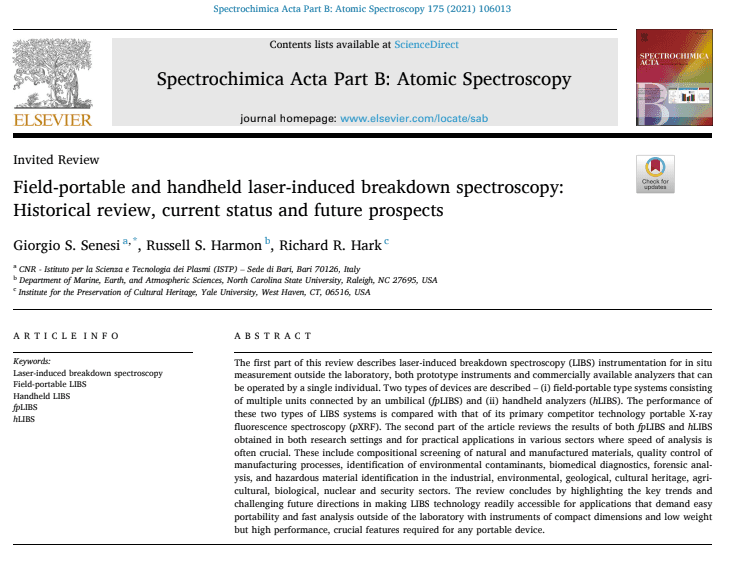
Invited review: "Field-portable and handheld LIBS history, status and prospects"
SciAps LIBS is included in this invited review of field-portable and handheld LIBS instrumentation, from development history to new research and commercial applications.
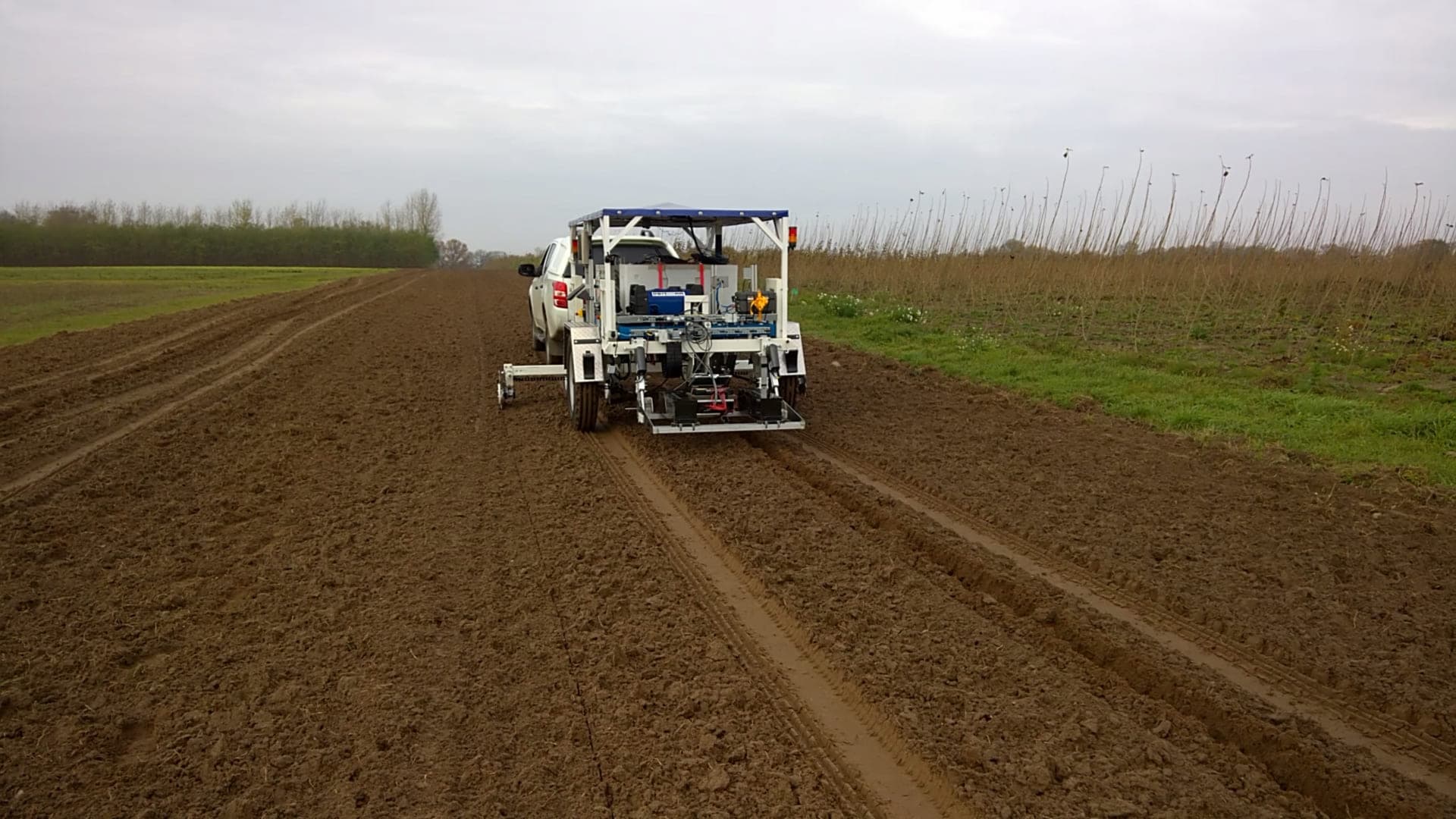
Soil nutrient detection for precision agriculture with handheld LIBS
A new study using SciAps Z-300 LIBS shows handheld laser induced breakdown spectroscopy to be a promising sensor technique for the in-field determination of various soil parameters. The key to this new approach is moving LIBS out of the lab and to the work site. Read our interview with one of the German researchers advancing agricultural analysis.
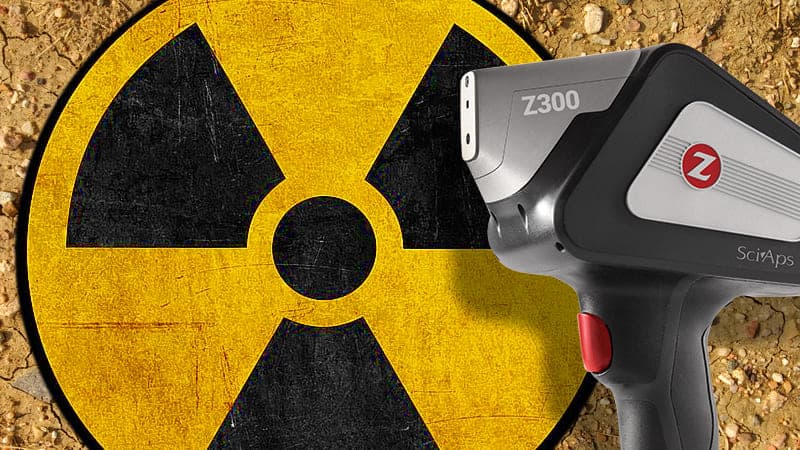
Handheld LIBS used to measure beryllium in nuclear waste
The Difficult Waste Team at Los Alamos National Laboratory, contractor to the United States Department of Energy, recently demonstrated the use of handheld LIBS analyzers in elemental characterization of radioactive wastes.
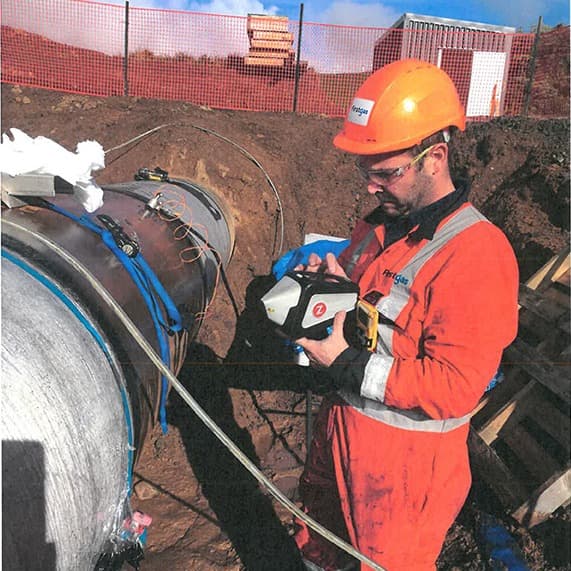
First Gas uses SciAps LIBS for CE in pipeline repairs
Analyses of CRMs before and after the pipeline measurements shows excellent consistency with their respective data sheets. This indicates that the LIBS calibration is accurate and that the calibration is not drifting during the measurement period.
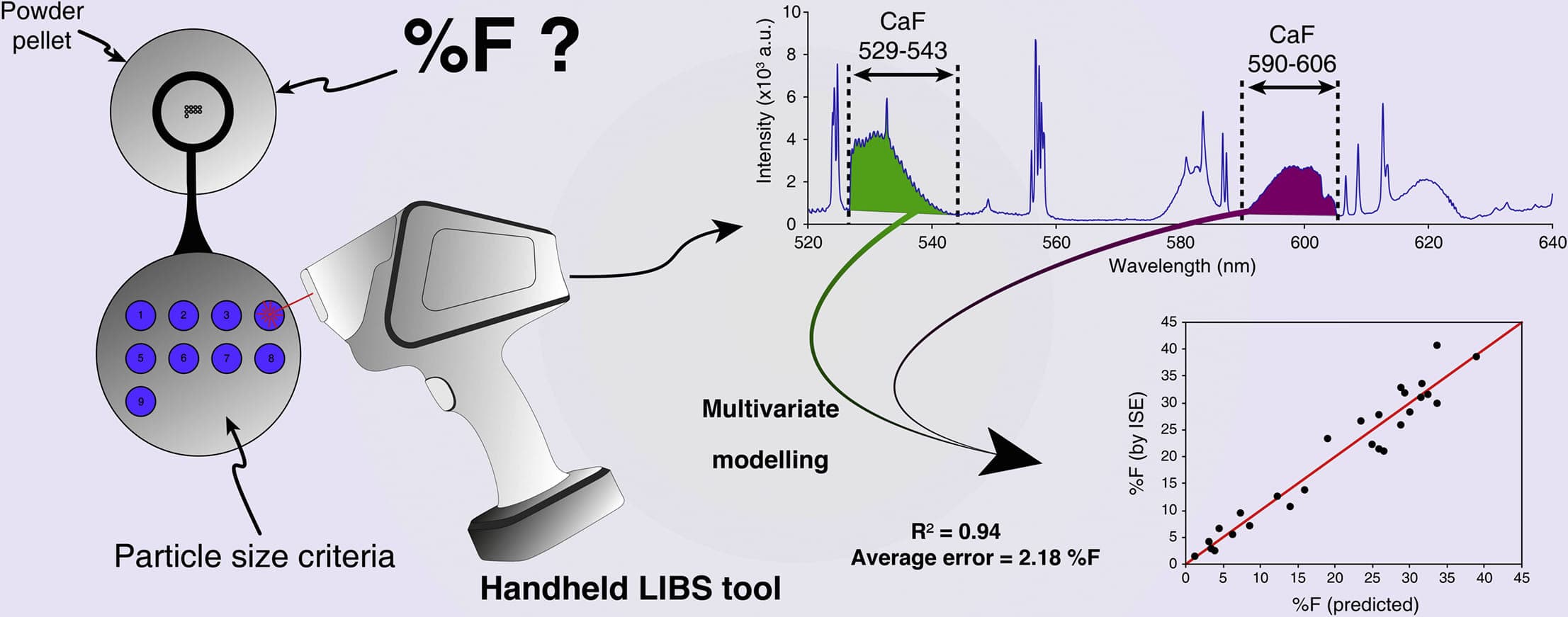
Optimisation of fast quantification of fluorine content using handheld LIBS
LIBS provides a multi-element detection that has been successfully used to quantify fluorine using either elementary or CaF molecular bands.
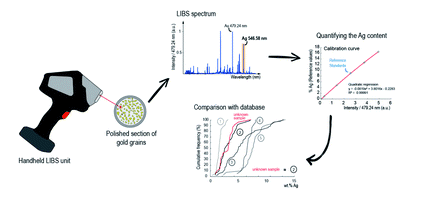
Technical Note: Handheld LIBS Provides a Fast and Easy Method to Trace Gold
A new study published as a Technical Note in the Journal of Analytical Atomic Spectrometry (JAAS) demonstrates LIBS as a fast and easy method to trace gold provenance, a previously difficult but necessary task to ensure a responsible supply chain from deposit to consumer.
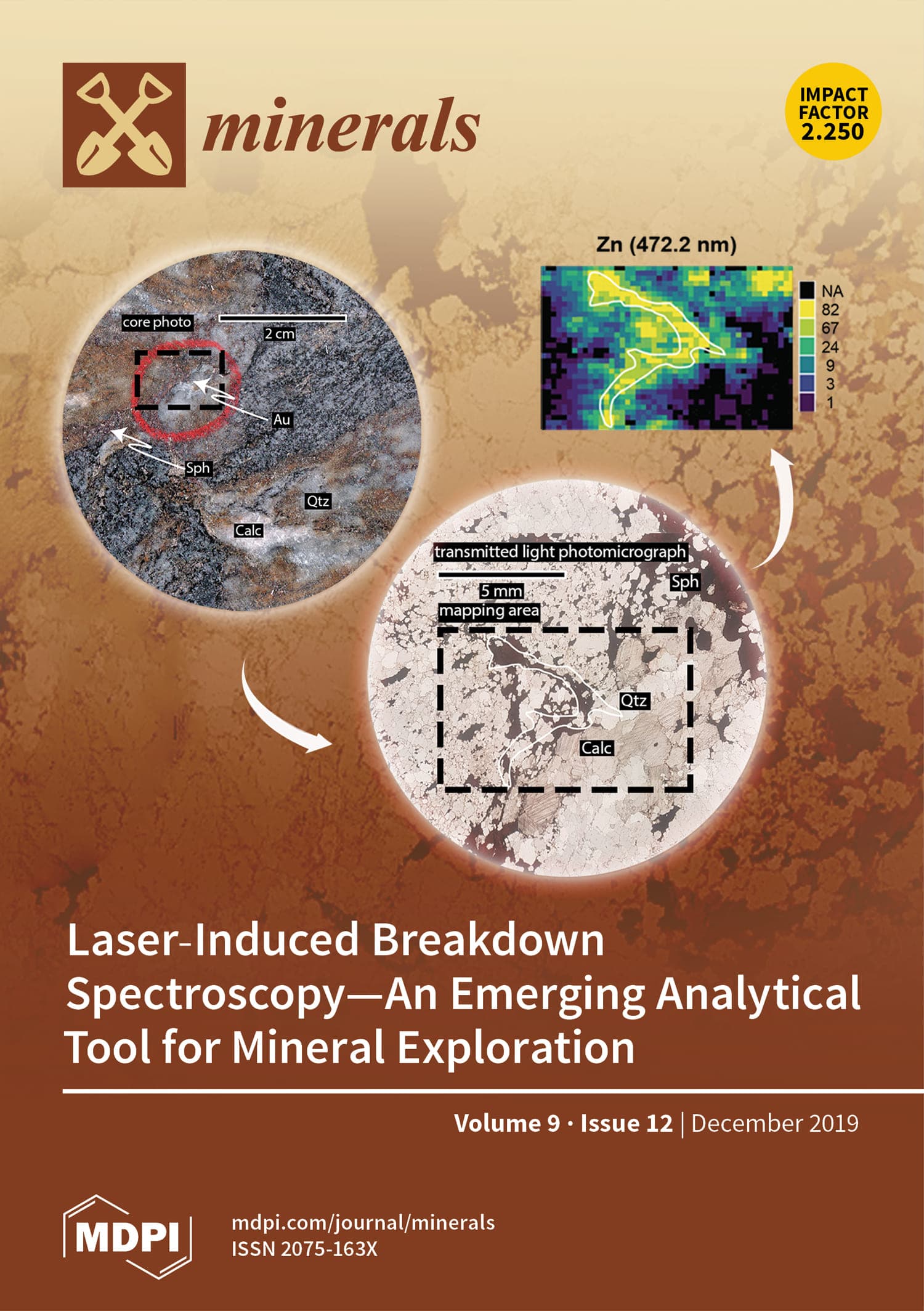
LIBS as an Emerging Analytical Tool for Mineral Exploration
A just-released publication in Minerals, in special issue Novel Methods and Applications for Mineral Exploration, the authors demonstrate how LIBS is ideally suited for field exploration programs that would benefit from rapid chemical analysis under ambient environmental conditions.
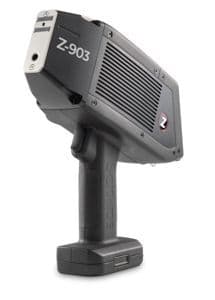
Analysis of Rare Earth Elements in Uranium Using Handheld Laser-Induced Breakdown Spectroscopy
In Applied Spectroscopy, Ben Manard and his Los Alamos National Laboratory colleagues use SciAps HH LIBS to quantify levels of REE in a uranium oxide matrix. Los Alamos personnel need a method to perform rapid chemical analysis in a nuclear facility.