
Real-World AnalysisReal-World Stories
Explore insights, applications, and stories from the field using handheld XRF, LIBS, VisNIR, and portable benchtop analyzers across scrap recycling, mining, geochemistry, forensics, and more.
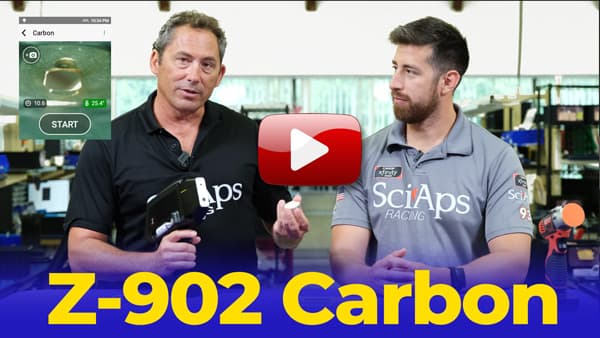
Z-902 Carbon Introduction Video
Debut of Z-902 Carbon LIBS Carbon in Stainless - Standard, L-grade, H-grade. Introducing the new SciAps Z 902 Carbon LIBS Specifically designed for the needs of PMI and NDT applications.
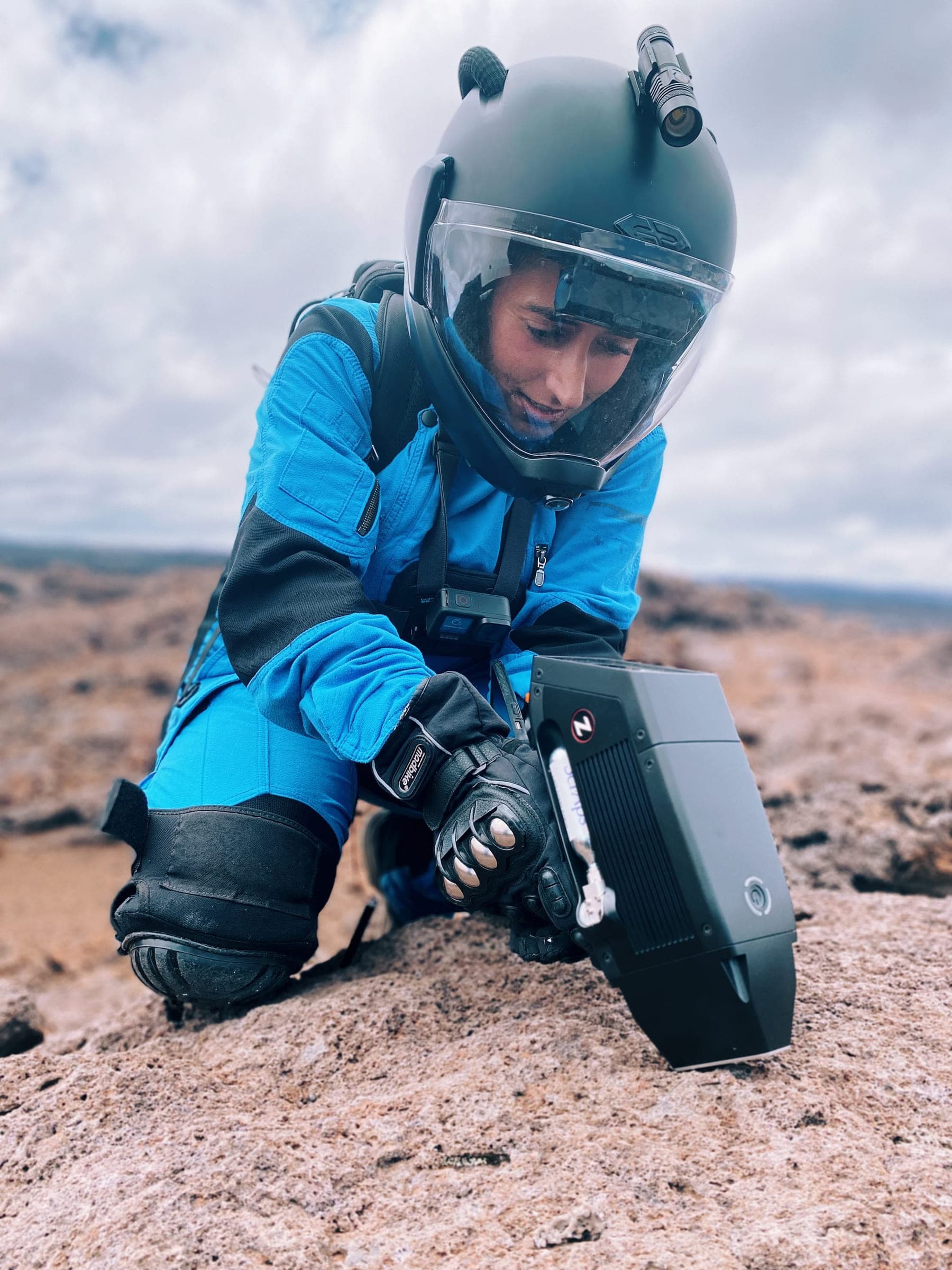
SciAps LIBS helps scientists prepare for Mars
SciAps Z-903 LIBS analyzer joins Hawai‘i Space Exploration Analog and Simulation with scientist Sarafina Nance on their Mars simulation mission August 13-27, 2021. For updates on the mission in real time, follow @HI-SEAS on Twitter.
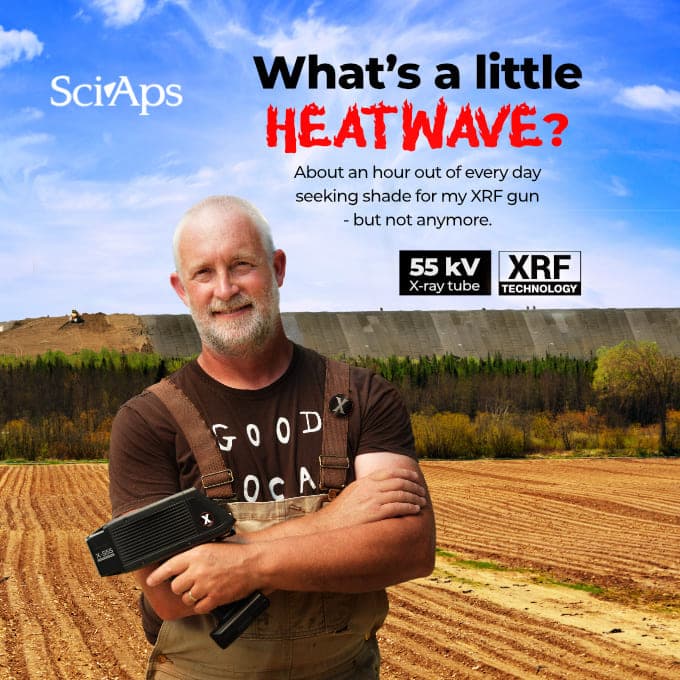
What's a little heatwave?
The SciAps X-555 Environmental analyzer is designed to work in tough conditions, even hot days in the sun. When the competition’s XRF analyzer is in the sun for hours, it gets too hot for accuracy. Then you’re looking for shade to cool it down. Not the case with SciAps X-555. You can work out in the sun all day long, and it never needs a break. The X-555 features the industry’s only 55 kV X-ray tube for best limits of detection on Cd, Ba, Sb, Sn, Ag and rare earth metals.
LIBS for museum collections: Q & A with Russell Harmon
In an effort to dig into the significance of the study, Dr. Harmon filled us in on the past, present, and future work with garnets, and the importance of SciAps handheld LIBS to geochemical fingerprinting and museum collections in general. Harmon is adjunct associate professor, Department of Marine, Earth, & Atmospheric Sciences, North Carolina State University.
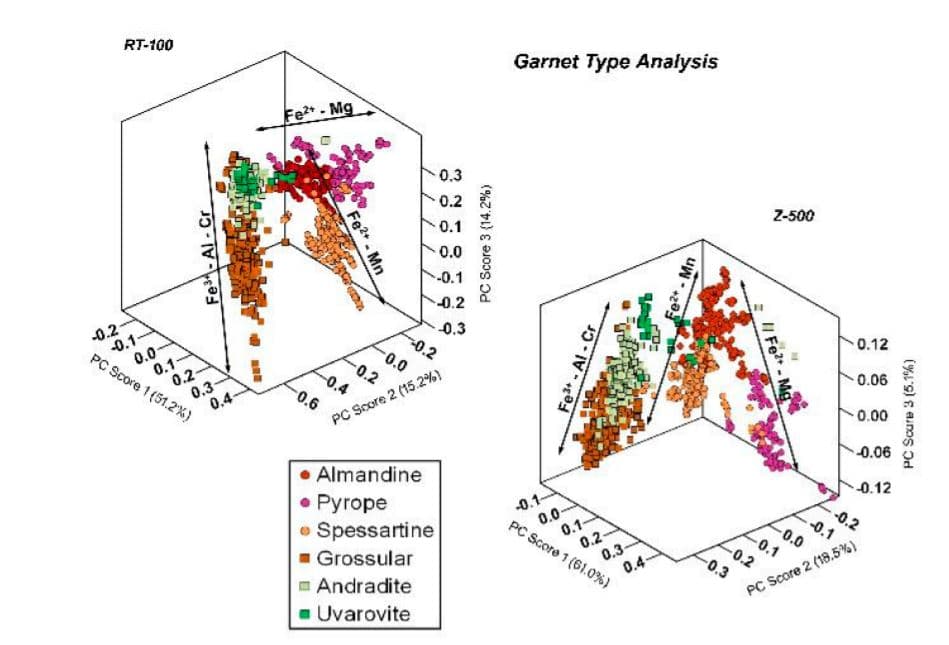
Analysis of garnet by LIBS — two practical applications
This study evaluated two practical applications of handheld LIBS using SciAps Z-300—validation of labels assigned to garnets in museum collections, and discrimination of LCT (lithium-cesium-tantalum) and NYF (niobium, yttrium and fluorine) pegmatites based on garnet geochemical fingerprinting—both of which could be implemented on site in a museum or field setting with a handheld LIBS analyzer.
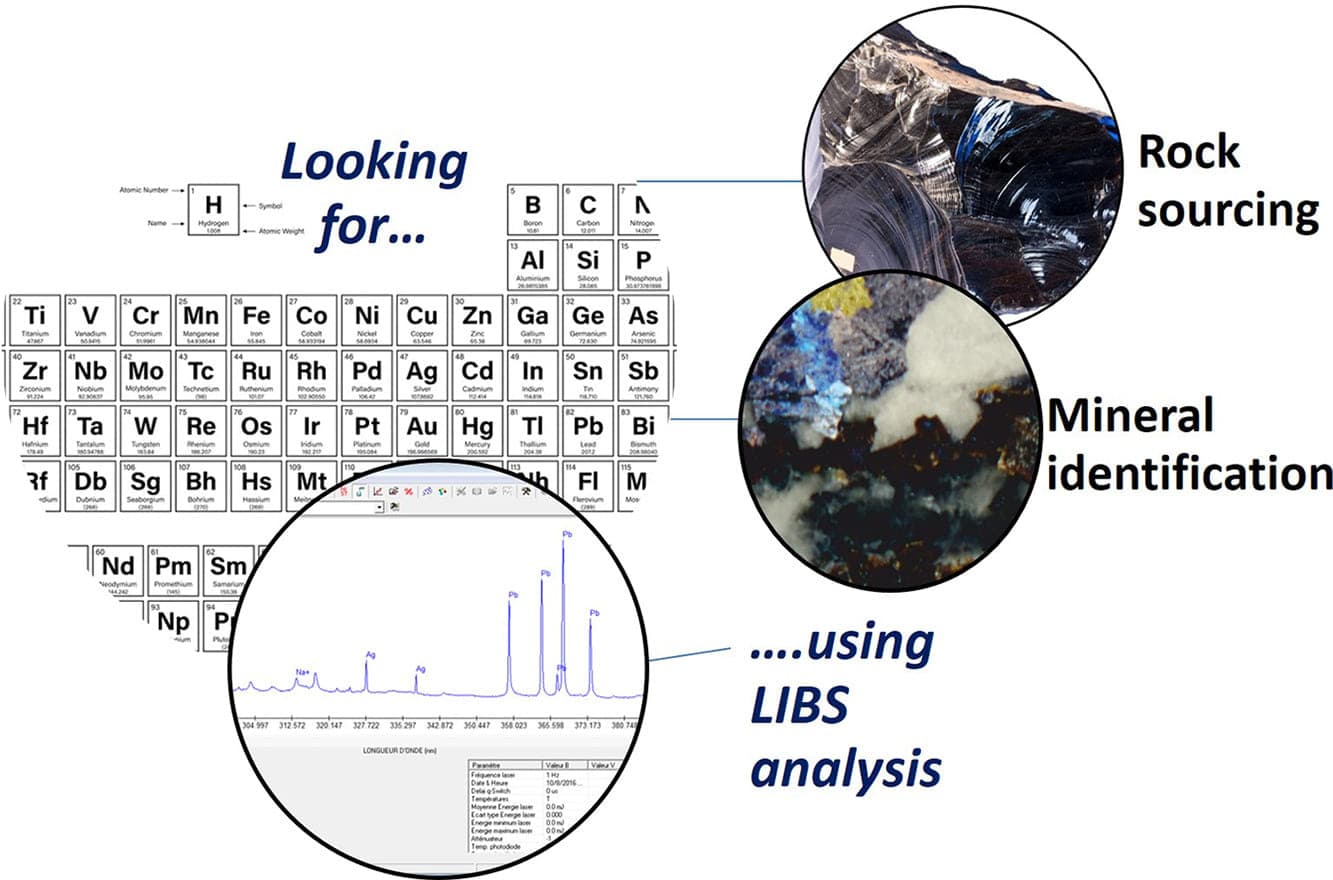
Advances in LIBS analysis for geology: A critical review
LIBS gives access to the most relevant elements; discrimination and sourcing of rocks or gems can be easily obtained; light elements are well detected at low level, and quantified in rocks; elemental LIBS mapping for strategic elements is of first interest.
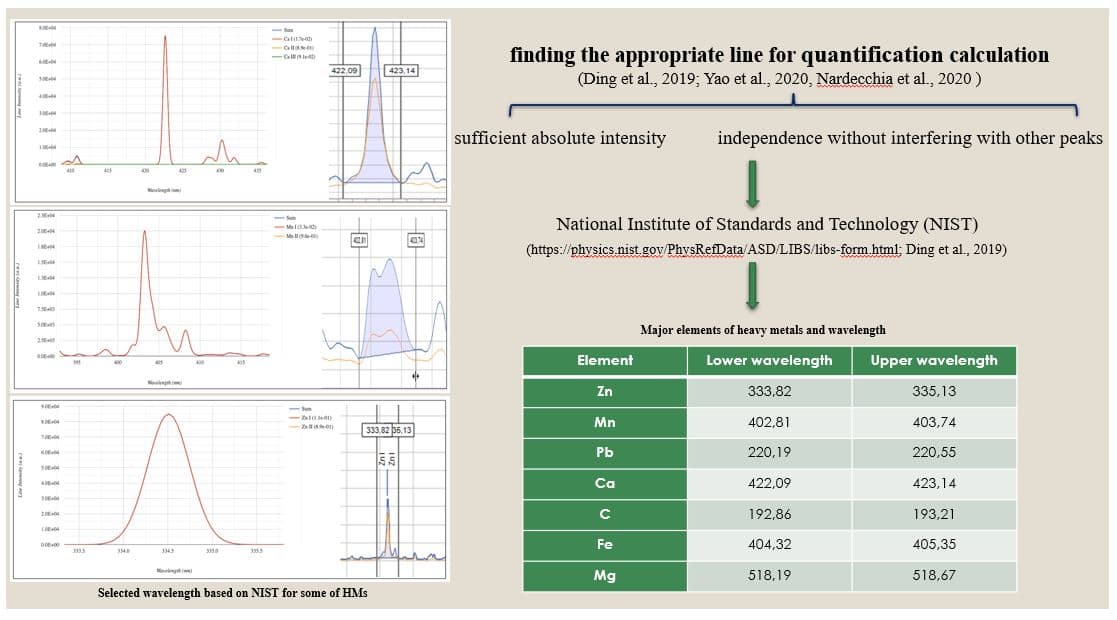
Investigation of handheld LIBS in terms of heavy metal detection in contaminated soil
SciAps LIBS was used to perform heavy metals analysis in contaminated soil. Handheld LIBS simplifies the necessary qualitative and quantitative analysis and is faster than other conventional techniques.
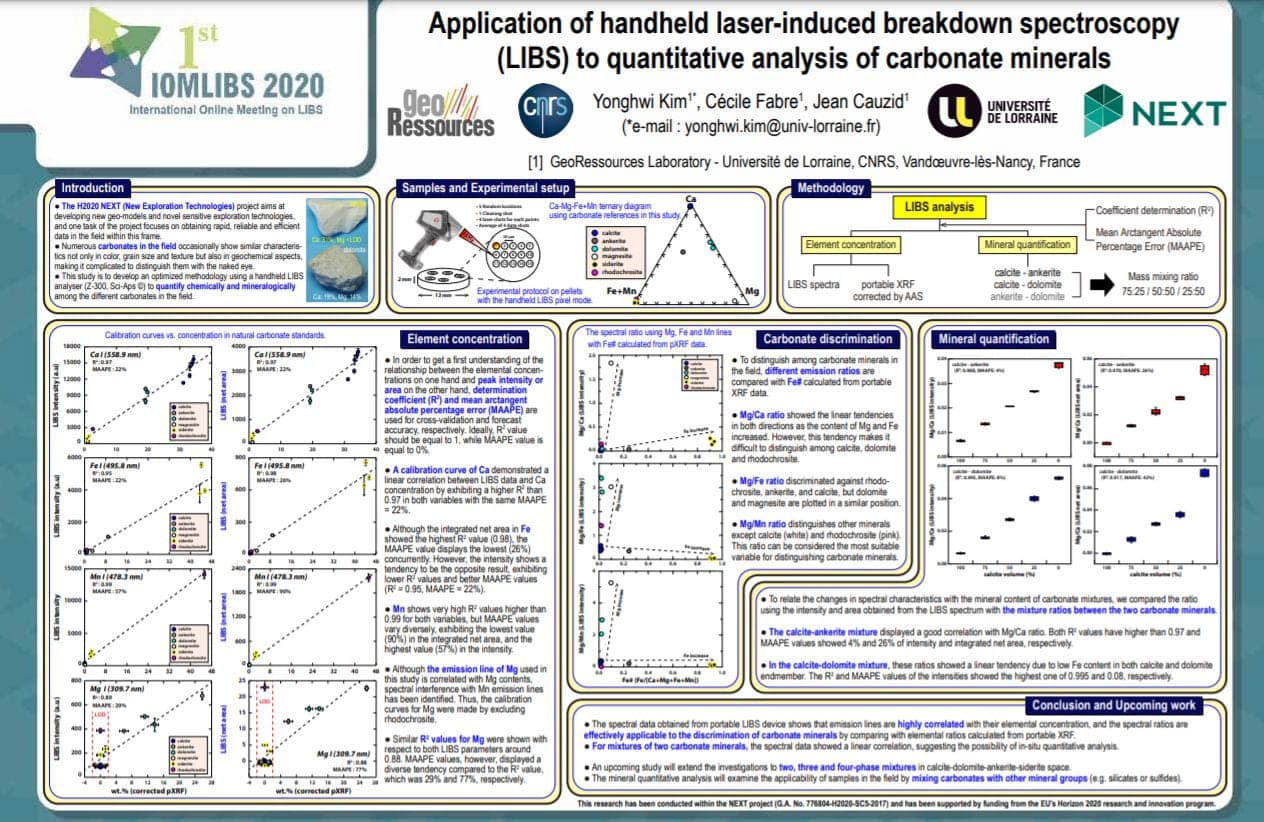
Application of Handheld LIBS to Quantitative Analysis of Carbonate Minerals
Handheld LIBS is effectively applicable for in-field determination of carbonates and quantifying carbonate mixtures. The study achieved accurate results with limited sample pre-treatment and faster analyses than other conventional techniques.
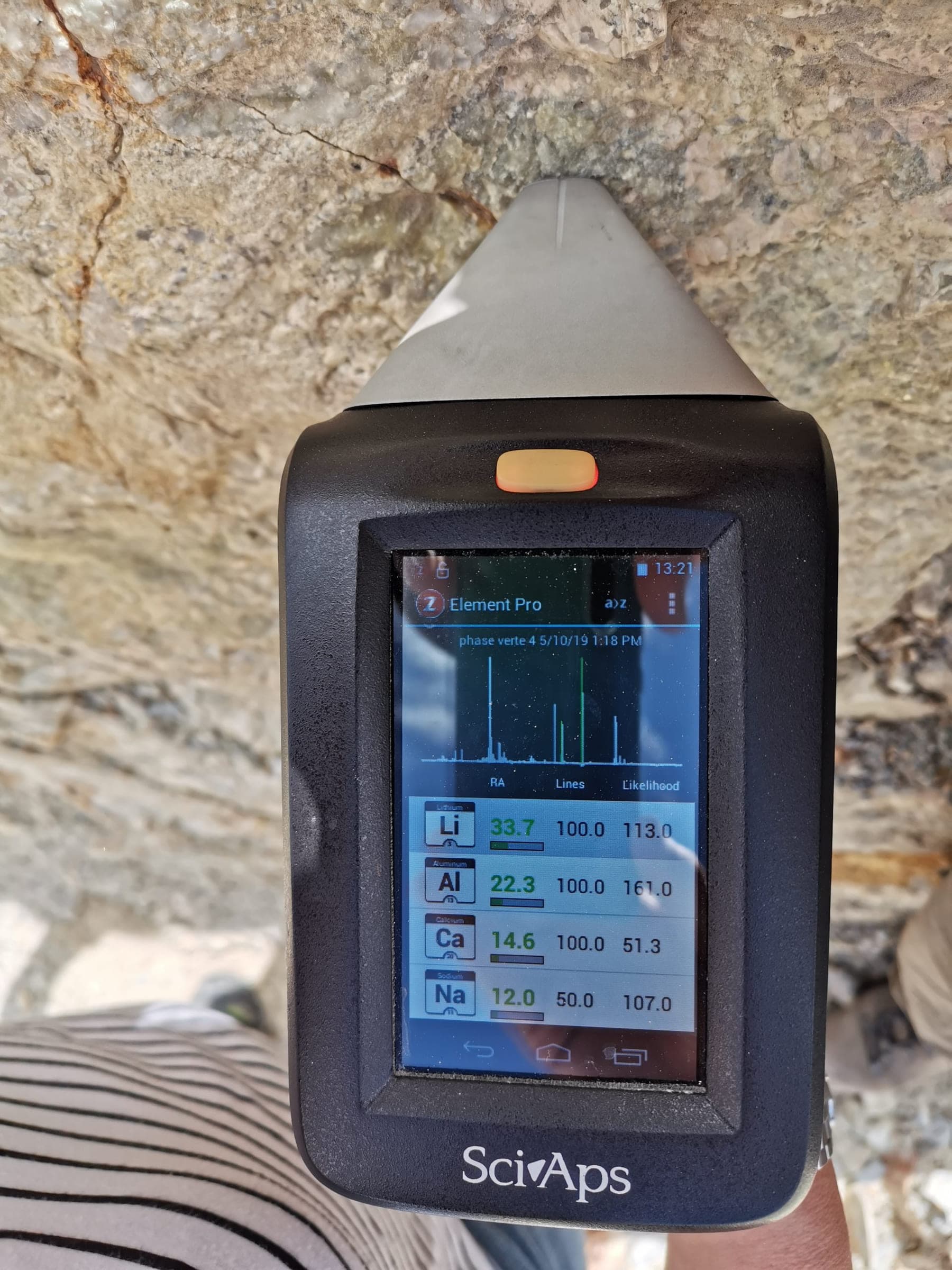
Analyses of Li-Rich Minerals Using Handheld LIBS
Researchers used SciAps Z-300 LIBS to provide over 4,000 spectra on lithium-content materials, including minerals, powder pellets, and rocks. High resolution spectrometers combined with low detection limits for light elements make handheld LIBS a powerful option to detect critical elements. The LIBS spectra dataset combined with the Li content dataset can be used to obtain quantitative estimation of Li in Li-rich matrices.
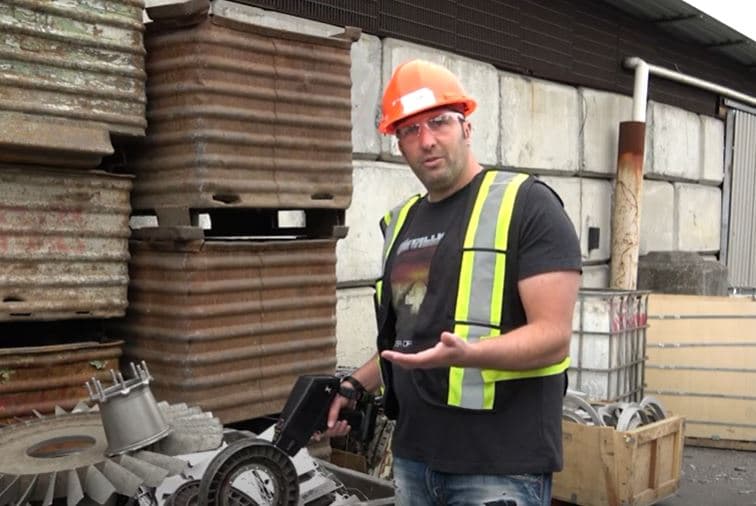
Grading aluminum with Scrap University and SciAps X-550
Brad Rudover, one of the founders of Scrap University, shared some helpful hints for grading aluminum, one of the many training sessions offered at Scrap University's Certified Scrap Metal Professional training course. The program follows ISRI specifications to train new hires and create a full-scope understanding of commodities to support better decisions by all operators.
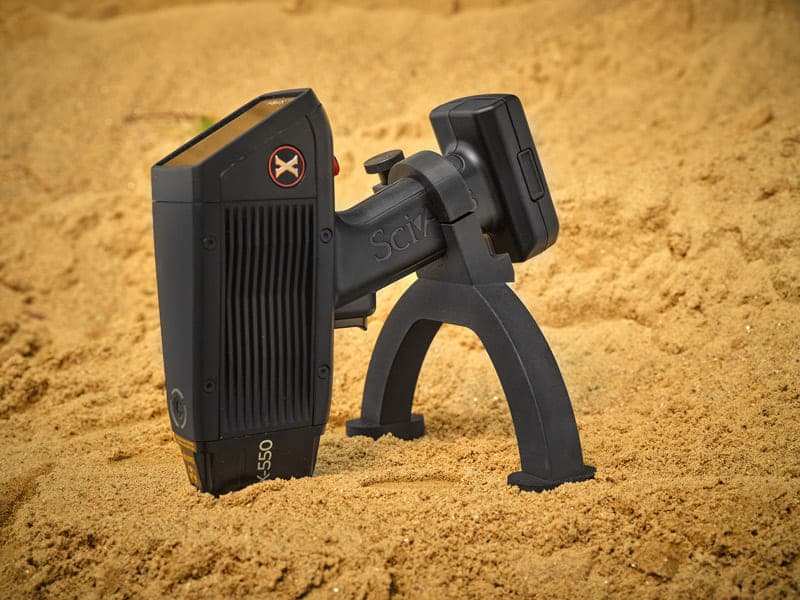
SciAps X-555: Don't sweat the field work
SciAps X-555 sets a new performance standard for handheld XRF. It weighs under 3 lbs. with battery, and it packs the industry’s most powerful X-ray tube for the best limits of detection on the EPA’s critical contaminants—especially for cadmium, silver, tin, antimony and barium, where the 55kV X-ray tube delivers the most benefit.
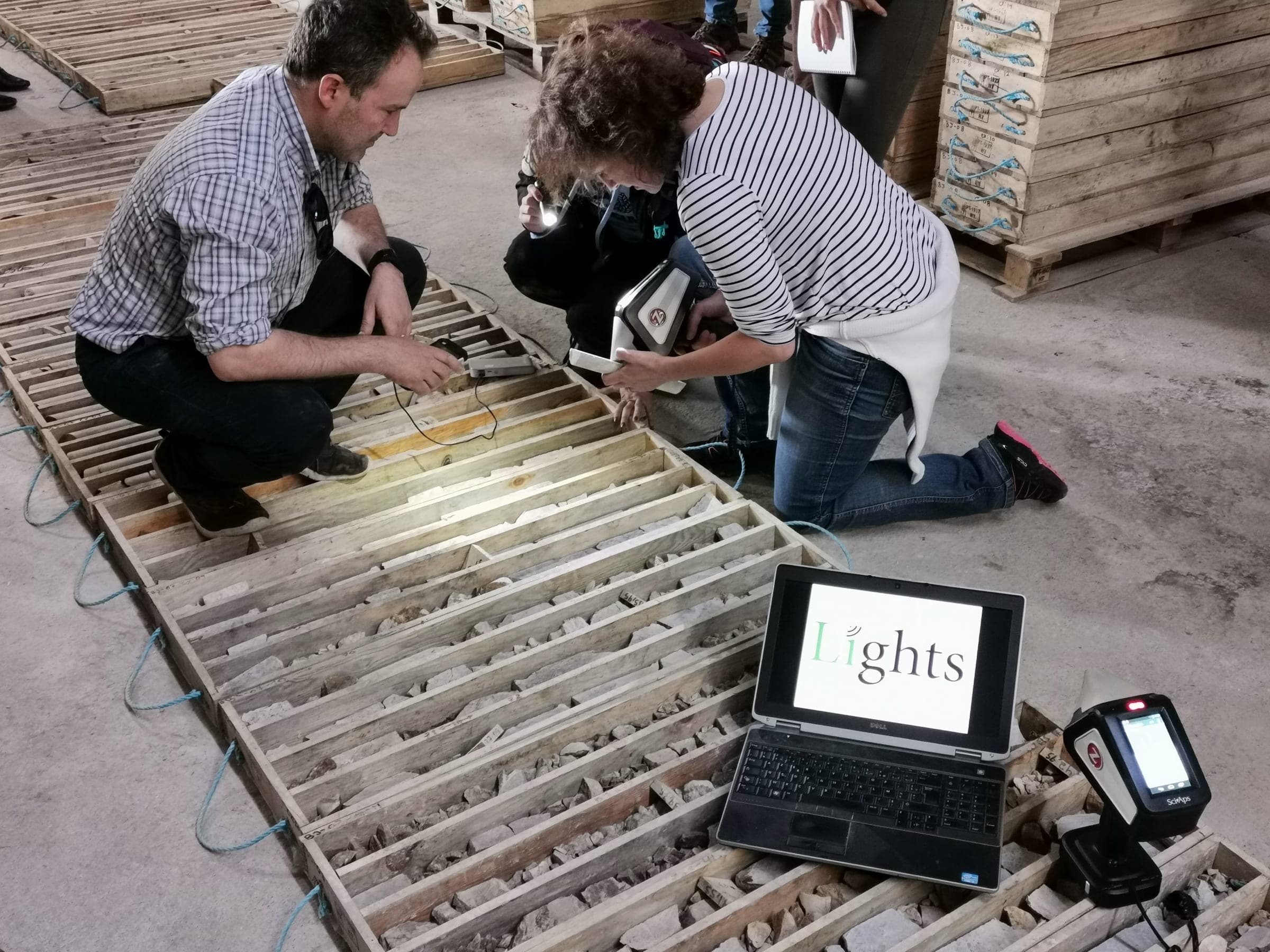
Making a case for handheld LIBS in mineral exploration
Dr. Fabre and her team use handheld LIBS for the rapid analysis of specific minerals on samples taken from the field, usually before any other expensive analysis, to detect the presence of elements such as metals.
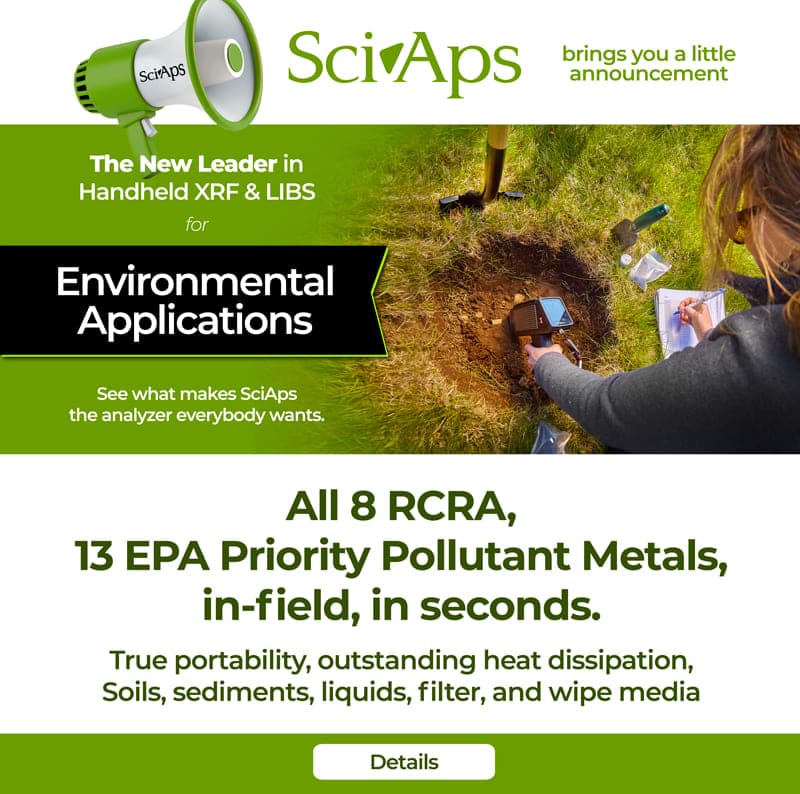
Introducing: In-field Environmental Metals
Two new analyzers provide the best limits of detection for critical in-field environmental metals testing. Using X-ray and laser, the new pair delivers all 8 RCRA metals and all 13 Priority Pollutant Metals, in seconds, with outstanding thermal dissipation.
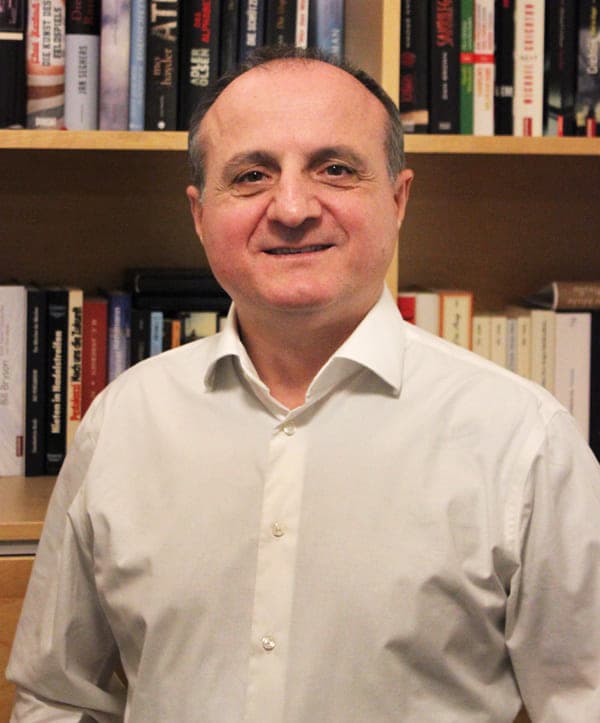
Vito Angona is new sales director of EMEA
Mr. Vito Angona will be taking the position of sales director, EMEA. Mr. Angona had previously joined the company in the role of DACH (Germany, Austria, Switzerland) managing director. After the successful opening in Germany, Mr. Angona will now take on the overall sales leadership role for all of the EMEA territory.
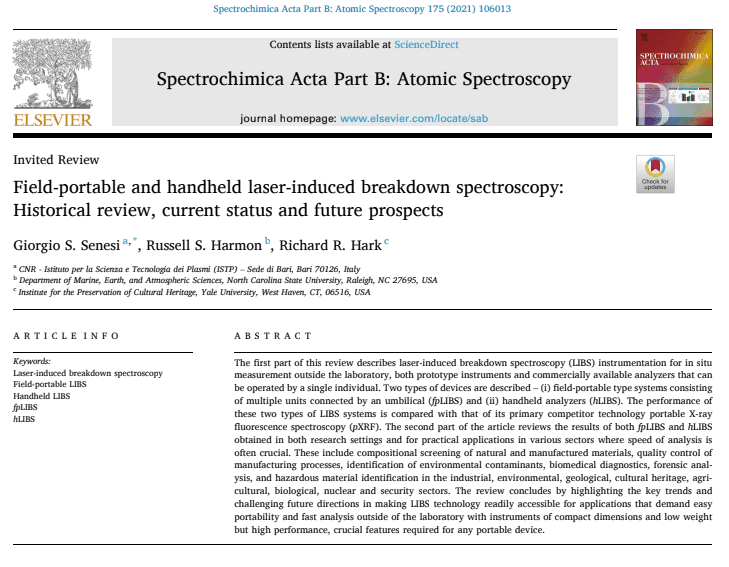
Invited review: "Field-portable and handheld LIBS history, status and prospects"
SciAps LIBS is included in this invited review of field-portable and handheld LIBS instrumentation, from development history to new research and commercial applications.
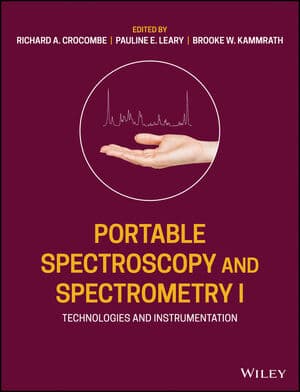
SciAps CTO Dave Day in 'Portable Spectroscopy and Spectrometry'
CTO Dave Day has contributed a chapter on handheld LIBS to "Portable Spectroscopy and Spectrometry, Volume 1, Technologies and Instrumentation," with editors Richard A. Crocombe, Pauline E. Leary, and Brooke W. Kammrath, published by Wiley."Portable Spectroscopy and Spectrometry: Volume One" is both an overview of the miniature technologies used in spectrometry and an authoritative guide to the specific instruments employed in a wide range of disciplines.